First Trip to China 2026: 10-Day Itinerary with Prices & Booking Tips
First Trip to China 2026: 10-Day Itinerary with Prices & Booking Tips A complete 10-day China itinerary for first-time visitors: Beijing → Xi'an → Shanghai with 2026 prices, seasonal tips, hotel area guides, and a day-by-day plan. Topics: Plan Your Trip, First Trip, Itineraries, Cities.
Planning a first trip to China can feel overwhelming — visa requirements, payment setup, vast distances, and a language barrier all add up. But a 10-day itinerary linking Beijing, Xi’an, and Shanghai is one of the most rewarding first trips you can make, provided you resist the urge to collect cities. These three cities form a clean route: imperial history in the north, the archaeological heart of the country in the middle, and contemporary urban China on the coast.
This guide walks you through the full planning process — which cities to choose, how to connect them, what things cost in 2026, and what to book before you arrive.
Before you go: key numbers
| Item | Detail |
|---|---|
| Visa | Most travelers need a visa; check current policy at your nearest Chinese embassy. 144-hour transit visas are available at Beijing, Xi’an, and Shanghai for eligible passports — see our visa guide. |
| Best season | April–May and September–October for comfortable weather and clear skies across all three cities. Summer (June–August) is hot and crowded; winter is cold but cheaper. |
| Budget range | Mid-range: approximately ¥600–1,000/day per person including hotel, meals, transport, and tickets. See the full budget breakdown. |
| SIM / data | Buy a tourist SIM at the airport or get an eSIM before departure. You will need data for maps, translation, and payments. |
| Currency | Chinese yuan (¥ / CNY). Cards are rarely accepted outside hotels; mobile payment is essential—see our payments guide. |
Day-by-day overview
| Day | City | Focus |
|---|---|---|
| 1 | Beijing | Arrival, hutong walk, settle in |
| 2 | Beijing | Forbidden City + Jingshan Park |
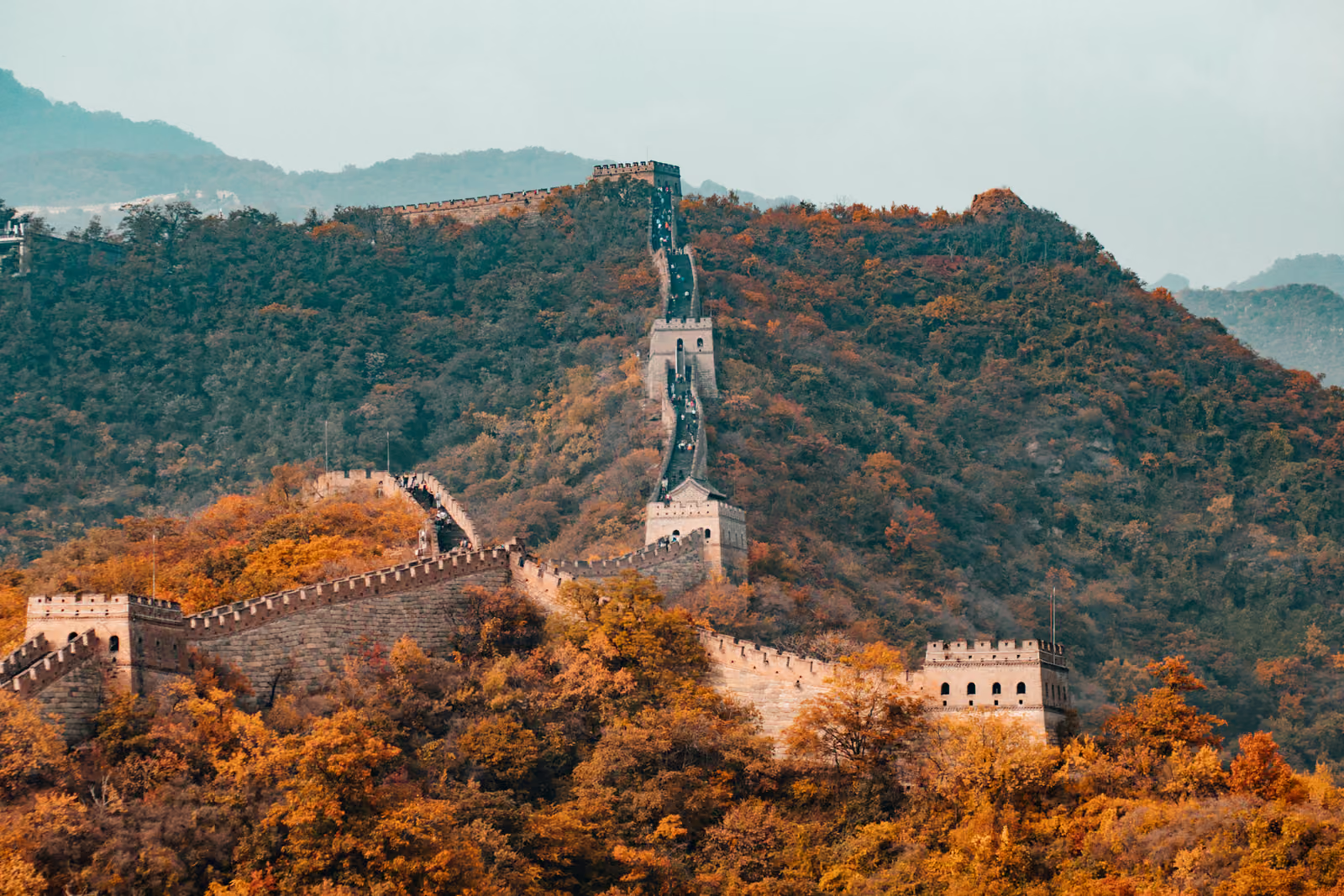
| 3 | Beijing | Great Wall (Mutianyu) |
| 4 | Beijing | Temple of Heaven, Summer Palace, or free day |
| 5 | Beijing → Xi’an | Morning high-speed train (4.5h), afternoon Ancient City Wall |
| 6 | Xi’an | Terracotta Army, Muslim Quarter dinner |
| 7 | Xi’an → Shanghai | Morning flight or train, afternoon Bund + Nanjing Road |
| 8 | Shanghai | French Concession walk, Shanghai Museum |
| 9 | Shanghai | Yu Garden, Lujiazui skyline, optional river cruise |
| 10 | Shanghai | Free morning, departure |
Seasonal guide: when to go
| Season | Weather | Crowds | Prices | Verdict |
|---|---|---|---|---|
| Spring (Apr–May) | 15–25°C, occasional rain | Moderate | Normal | Best window — comfortable across all three cities |
| Summer (Jun–Aug) | 28–35°C, humid, thunderstorms | Peak (school holidays) | +20–40% on hotels | Avoid if possible — oppressive heat and long queues |
| Autumn (Sep–Oct) | 15–25°C, dry, clear | Moderate to high (Oct 1–7 Golden Week) | Normal, spike during Golden Week | Tied for best — clear skies, great visibility |
| Winter (Nov–Mar) | -5 to 8°C, dry, windy | Low | -20–30% on hotels | Budget-friendly but cold; Great Wall and Bund lose some magic |
Key dates to avoid: Chinese New Year (late Jan/early Feb, dates vary — 1–2 weeks of disruption), National Day Golden Week (Oct 1–7), and Labor Day (May 1–5). All three bring massive domestic crowds and price surges.
Where to stay in each city
Beijing:
- Dongsi / Wangfujing — Central, atmospheric hutongs nearby, metro Lines 5 and 1. Best for first-timers who want walkability. ¥300–600/night mid-range.
- Gulou / Nanluoguxiang — Hip hutong area, great cafés and bars, metro Lines 2 and 8. Quieter at night. ¥250–500/night.
- Sanlitun — Modern, international dining and nightlife. Less “Beijing flavor” but very convenient. ¥400–800/night.
Xi’an:
- Inside the City Wall (Bell Tower area) — Walking distance to Muslim Quarter, metro hub. Best for 1–2 night stays. ¥200–400/night.
- South Gate (Yongning Gate) — Quieter, near the wall cycling route, good restaurants. ¥250–500/night.
- High-Tech Zone — Modern business district, chain hotels, far from old city sights. Only if budget is the priority. ¥150–300/night.
Shanghai: For detailed neighborhood guidance with commute times and food tips per area, see where to stay in Shanghai.
Days 1–4: Beijing
Give Beijing four nights. Use the first day to settle in and walk a hutong neighborhood rather than forcing a major sight after a long flight. Reserve separate days for the Forbidden City and the Great Wall; both deserve your best energy. Keep one flexible day for the Temple of Heaven, the Summer Palace, or a slower neighborhood walk.
Practical essentials for Beijing:
- Forbidden City (故宫): Tickets ¥60 (peak season Apr–Oct), ¥40 (off season). Book at least 7 days ahead at the official site — tickets sell out quickly. Closed Mondays. Allow 3–4 hours minimum inside.
- Great Wall: Mutianyu (慕田峪) suits most first-time visitors — well restored, less crowded than Badaling, about 1.5 hours from central Beijing by car or 2 hours by public bus. Entry ¥40; cable car round trip ¥120. Jingshanling (金山岭) is wilder and quieter, better for hikers.
- Temple of Heaven (天坛): Entry ¥15 (combined ticket ¥34 includes inner grounds). Go before 9am to see locals practicing tai chi and dancing in the park.
- Metro: Day pass ¥20, or use Alipay/WeChat transit QR code. Lines 1 and 2 cover most central sights.
Food highlights: Don’t miss Peking duck (seasoned whole roast duck, ¥150–300 for a whole duck at mid-range restaurants like Sijiayuan or Dadong). Try jianbing (煎饼, savory breakfast crepe, ¥8–12) from street vendors. Zhajiangmian (炸酱面, noodles with soybean paste, ¥15–25) is the local staple.
See our detailed four-day Beijing guide for day-by-day suggestions.
Days 5–6: Xi’an
Take a morning high-speed train and treat the journey as part of the trip. Beijing Xi → Xi’an Bei takes about 4.5 hours; second-class seat approximately ¥515. Buy tickets 7–15 days in advance through 12306.cn or the app.
In Xi’an, spend one day with the Terracotta Army and one inside the old city walls. The Muslim Quarter is most rewarding when you explore side streets and choose busy specialist stalls instead of trying to eat everything in one sweep.
Practical essentials for Xi’an:
- Terracotta Army (兵马俑): Tickets ¥120. Book ahead — daily visitor caps apply. Take tourist bus 5 (306) from Xi’an railway station, about 1 hour. Allow 3–4 hours on site.
- Ancient City Wall (城墙): ¥54 entry, bike rental ¥45 for a full loop (about 14 km, 1.5–2 hours cycling). Best in late afternoon.
- Muslim Quarter (回民街): Free to walk. Must-try: roujiamo (肉夹馍, ¥10–15), yangrou paomo (羊肉泡馍, ¥25–35), and bifang tangbao (灌汤包).
Food highlights beyond Muslim Quarter: Biangbiang noodles (biángbiáng miàn, 裤带面) — thick hand-pulled belt noodles with chili, ¥15–25 at local spots. Liangpi (凉皮, cold rice noodles, ¥8–12) is a refreshing snack, especially in summer. For a sit-down meal, try Xi’an’s local specialty — dumpling banquet (饺子宴, ¥80–150 per person at restaurants like De Fa Chang).
- Metro: Lines 1, 2, 3, and 4 cover the main areas.
Days 7–10: Shanghai
Fly or take the train to Shanghai, depending on the schedule that gives you the better daytime arrival. Xi’an Bei → Shanghai Hongqiao takes about 6–7 hours by high-speed train (second class ~¥600), or fly in about 2.5 hours (¥500–1,200 depending on timing).
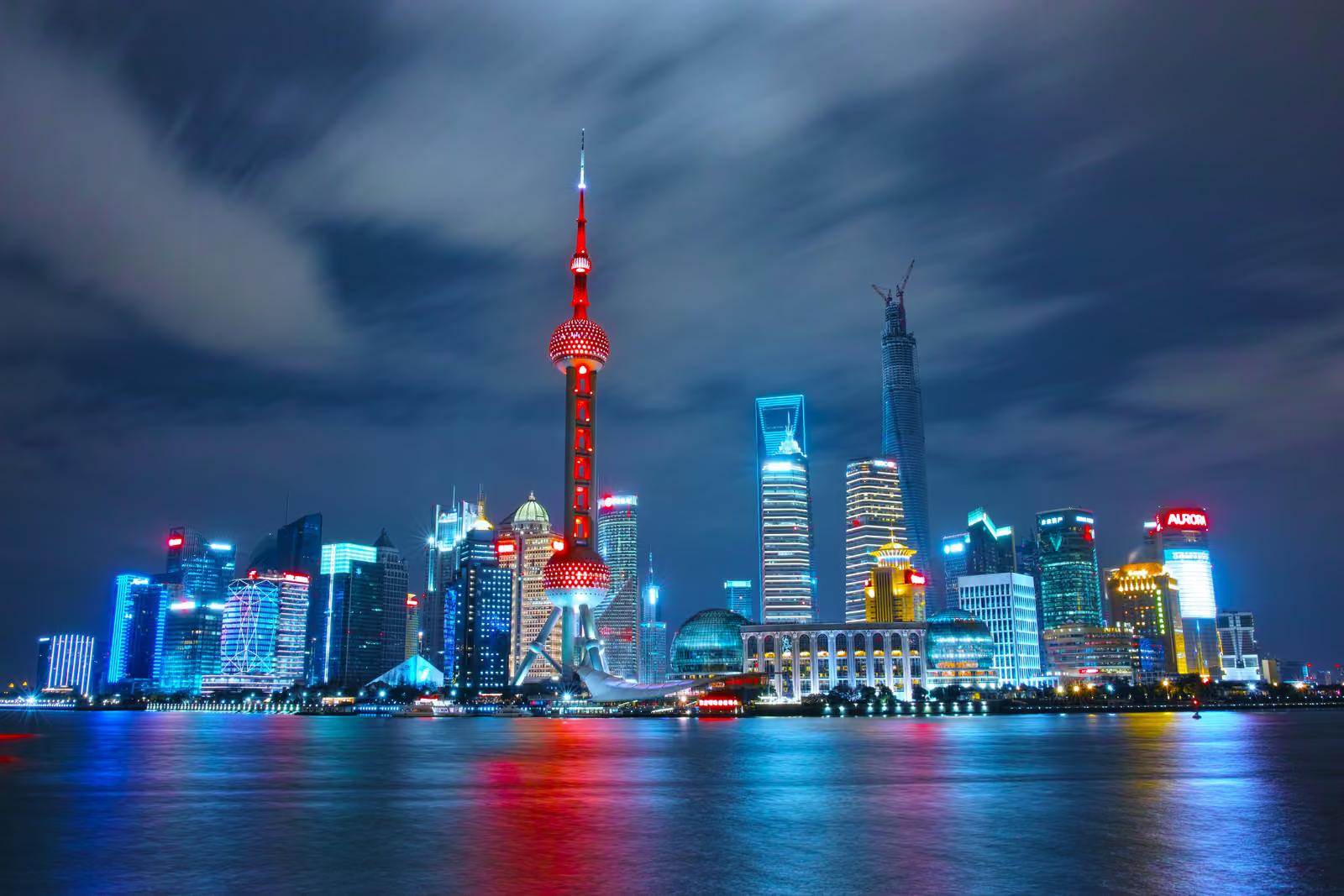
Walk the Bund early, cross to Pudong for the skyline, then spend another day in the former French Concession. Use the final day for a water-town trip only if you still have energy; Shanghai itself easily fills three days.
Practical essentials for Shanghai:
- The Bund (外滩): Free, best at dawn or after 9pm when lights are on but crowds thin.
- Yu Garden (豫园): ¥40 (peak), ¥30 (off). Go early or late to avoid crowds. Adjacent bazaar is touristy but worth a quick pass.
- Former French Concession: Free to walk. Key streets: Wukang Road, Anfu Road, Fuxing Road. Best cafés and boutiques.
- Shanghai Museum (上海博物馆): Free, excellent permanent collection. Closed Mondays. Allow 2 hours.
- Disneyland (if interested): ¥475 regular / ¥599 peak day. Book well ahead; arrive at opening for shortest queues.
- Metro: The largest system in the world. Single rides ¥3–10. Use Alipay transit QR code for all lines.
Food highlights: Xiao long bao (小笼包, soup dumplings) — ¥20–40 at Nanxiang or Jia Jia Tang Bao. Shengjian mantou (生煎馒头, pan-fried buns, ¥15–25) are Shanghai’s signature street breakfast. Try cong you ban mian (葱油拌面, scallion oil noodles, ¥10–15) — deceptively simple, deeply satisfying.
For neighborhood-by-neighborhood hotel guidance, see where to stay in Shanghai.
Daily budget snapshot
| Expense | Budget | Mid-range | Comfortable |
|---|---|---|---|
| Hotel (per night) | ¥150–250 | ¥300–600 | ¥700–1,200 |
| Meals (per day) | ¥60–100 | ¥150–250 | ¥300–500 |
| Local transport | ¥20–30 | ¥30–50 | ¥50–80 |
| Attraction tickets | ¥50–100 | ¥100–200 | ¥100–200 |
| Daily total | ¥280–480 | ¥580–1,100 | ¥1,150–1,980 |
Prices per person. Intercity trains and flights are additional (Beijing→Xi’an ~¥515, Xi’an→Shanghai ~¥600 train or ¥500–1,200 flight).
Extending your trip
Ten days is a great start, but if you have two weeks or more, consider adding:
- Zhangjiajie (3 days) — Avatar mountains, glass bridge, and ethnic minority culture. Fly from Shanghai (~2.5h). See our 3-day guide.
- Chengdu (2–3 days) — Giant pandas, spicy food capital, laid-back teahouse culture. High-speed train from Xi’an (~3.5h). See our food weekend guide.
- Guilin / Yangshuo (3 days) — Karst landscape, Li River bamboo raft, cycling through rice paddies. Fly from Shanghai (~2h). See our comparison guide.
- Yunnan (2 weeks) — Ancient towns, minority cultures, from Kunming to Shangri-La. See our altitude-safe route.
The route works because each stop feels different and the long transfers are limited to two. If you have fewer than ten days, remove Xi’an. If you have two full weeks, add Chengdu or a landscape stop after Xi’an rather than squeezing more cities into the same ten days.
Digital toolkit for a multi-city trip
This route spans three cities with different transport systems, different restaurant ecosystems, and different navigation challenges. Your phone is your lifeline — payments, maps, translation, and booking all depend on it.
Essential apps to install before departure:
| App | What it does | Why you need it on this route |
|---|---|---|
| Alipay (支付宝) | Mobile payments, transit QR codes, ride-hailing | Required for nearly all transactions. Link your international card before arrival. Works in all three cities. |
| WeChat (微信) | Messaging, payments (backup), mini-programs | Many restaurants and hotels use WeChat for communication. Some accept WeChat Pay if Alipay fails. |
| Amap (高德地图) or Baidu Maps | Navigation, transit directions, ride-hailing | Google Maps has limited data in China. Amap works offline once you download city packs. Download Beijing, Xi’an, and Shanghai packs before departure. |
| Trip.com (携程) | Train tickets, hotels, flights, attraction tickets | Book Beijing→Xi’an and Xi’an→Shanghai trains here. Also buy timed-entry tickets for Forbidden City and Terracotta Army. |
| Pleco | Chinese-English dictionary with OCR | Point your camera at menus, signs, or documents for instant translation. The OCR feature is essential for reading Chinese-only menus. |
| MetroMan or city-specific metro apps | Metro maps and route planning | Each city has a different metro system. MetroMan covers all three, but city-specific apps (Beijing Subway, Shanghai Metro) have real-time arrivals. |
| Didi (滴滴) | Ride-hailing (China’s Uber) | Available in all three cities. Cheaper than taxis, no language barrier (input destination in English), transparent pricing. |
Connectivity and offline preparation:
- Buy a tourist SIM card at the airport (China Mobile or China Unicom, ¥100–200 for 7–15 days with data). Or get an eSIM before departure (Airalo, Holafly). You need data for payments, maps, and translation — a dead phone means no payment, no map, no taxi.
- Download offline maps for all three cities before departure. In Amap: Settings → Offline Maps → Download Beijing, Xi’an, Shanghai. These work without data.
- Screenshot your hotel addresses in Chinese characters before leaving each morning. Show these to taxi drivers — pronunciation is unreliable, and most drivers don’t read English addresses.
- Save emergency contacts offline: your country’s embassy phone number, travel insurance emergency line, hotel front desk. If your phone dies and you borrow someone’s phone, you need these numbers.
- Carry a power bank (20,000mAh minimum). You will use your phone constantly. A dead phone is the most disruptive problem on this trip. See the “What to do if things go wrong” section above.
Payment backup strategy:
- Primary: Alipay linked to your international card. Test it before departure — some cards require verification.
- Backup 1: WeChat Pay (if available). Set it up as a secondary option.
- Backup 2: Carry ¥300–500 in cash as emergency backup. Keep it separate from your wallet. Some small restaurants and street vendors are cash-only, and if your phone dies, cash is your only option.
- Backup 3: A physical credit card (Visa or Mastercard) for hotels and high-end restaurants. Most places don’t accept cards, but international hotels do.
Seasonal food calendar: what’s fresh when you visit
Each city has seasonal specialties that appear on menus at specific times of year. Eating in season means better flavor, lower prices, and a more authentic experience.
Beijing seasonal highlights:
| Season | What’s in season | Where to find it | Price range |
|---|---|---|---|
| Spring (Apr–May) | Fresh bamboo shoots (春笋), spring pancakes (春饼), lamb | Local restaurants, hutong eateries | ¥30–60 per dish |
| Summer (Jun–Aug) | Cold noodles (凉面), beer, grilled lamb skewers (羊肉串), watermelon | Street vendors, night markets | ¥10–30 |
| Autumn (Sep–Oct) | Peking duck (peak season), chestnuts (栗子), chrysanthemum tea | Roast duck restaurants, street vendors | ¥100–200 for duck, ¥10–20 for chestnuts |
| Winter (Nov–Mar) | Copper pot hotpot (铜锅涮肉), lamb, pickled vegetables | Donglaishun and local hotpot restaurants | ¥80–150 per person |
Xi’an seasonal highlights:
| Season | What’s in season | Where to find it | Price range |
|---|---|---|---|
| Spring (Apr–May) | Fresh apricots, green tea, light noodle dishes | Muslim Quarter, local markets | ¥5–15 |
| Summer (Jun–Aug) | Cold rice noodles (凉皮), iced plum juice (酸梅汤), watermelon | Street vendors everywhere | ¥5–15 |
| Autumn (Sep–Oct) | Persimmons (柿子), pomegranates, hearty noodle soups | Muslim Quarter, street vendors | ¥5–20 |
| Winter (Nov–Mar) | Lamb paomo (羊肉泡馍), spicy hotpot, roasted sweet potatoes | Muslim Quarter restaurants, street vendors | ¥25–50 |
Shanghai seasonal highlights:
| Season | What’s in season | Where to find it | Price range |
|---|---|---|---|
| Spring (Apr–May) | Bamboo shoots (春笋), river shrimp, green tea | Local restaurants, Yu Garden area | ¥30–80 per dish |
| Summer (Jun–Aug) | Crayfish (小龙虾), cold noodles, iced drinks | Street vendors, Haidilao (for crayfish) | ¥60–120 per plate of crayfish |
| Autumn (Sep–Oct) | Hairy crab (大闸蟹), osmanthus cakes, chrysanthemum tea | Chenghuang Temple area, specialty crab restaurants | ¥80–300+ per crab |
| Winter (Nov–Mar) | Lamb hotpot, red-braised pork, warm soups | Local restaurants | ¥40–100 per dish |
Pro tip: Autumn (September–October) is the best season for food across all three cities. The weather is cool, the harvest is fresh, and specialties like Peking duck, hairy crab, and chestnuts are at their peak. If you visit in summer, focus on cold dishes and iced drinks to beat the heat.
Responsible tourism on a multi-city trip
Traveling across three major cities gives you a chance to see China’s rapid development — but it also means your choices affect local communities and environments. Here’s how to travel responsibly on this route.
Support local businesses:
- Eat at family-run restaurants rather than international chains. A bowl of noodles at a hutong shop in Beijing or a Muslim Quarter stall in Xi’an puts money directly into the local economy and gives you a more authentic experience.
- Buy souvenirs from local artisans — tea from Beijing tea shops, terracotta warrior replicas made by Xi’an craftspeople, silk from Shanghai markets. Avoid mass-produced airport gifts.
- Stay in locally-owned hotels when possible. Boutique guesthouses and Chinese hotel chains (Atour, Ji Hotel) keep more revenue in China than international chains.
Respect cultural sites:
- Don’t touch ancient walls, sculptures, or artifacts. The Forbidden City, City Wall in Xi’an, and Yu Garden all have centuries of history. Oils from hands damage surfaces.
- Follow photography rules. Some temples and museums prohibit flash or tripods. Ask before photographing people. See the “Cultural etiquette” section above.
- Stay on marked paths. At the Great Wall and Terracotta Army, off-limits areas exist for preservation. Don’t climb on restricted sections.
Reduce your environmental impact:
- Carry a reusable water bottle. Tap water isn’t drinkable, but bottled water is available everywhere. Carry a bottle and refill it at your hotel to reduce plastic waste.
- Use public transport. The metro systems in Beijing, Xi’an, and Shanghai are efficient and reduce traffic congestion. Walking is even better for short distances.
- Choose trains over flights when possible. Beijing→Xi’an by train takes 4.5 hours and emits far less carbon than flying. See the train guide for booking tips.
Be culturally sensitive:
- Learn basic Mandarin phrases. Even a few words (你好, 谢谢, 多少钱) show respect and make interactions more positive. See the “Essential Mandarin phrases” section above.
- Don’t discuss sensitive political topics. Tibet, Xinjiang, and territorial disputes are off-limits unless a local person brings them up. Focus on food, culture, and shared interests.
- Ask before photographing people. Most Chinese people are happy to be photographed, but always ask first. A smile and pointing to your camera works.
Responsible tourism doesn’t mean sacrificing comfort. You can eat at local restaurants, stay in boutique hotels, and use public transport while still enjoying a memorable trip. In fact, these choices often lead to better experiences than tourist-oriented alternatives.
Travel style adaptations for this route
The Beijing→Xi’an→Shanghai route works for many types of travelers, but each style has different priorities. Here’s how to adapt the itinerary.
Solo traveler
Advantages: Complete flexibility, easier to meet locals, lower costs (single rooms).
Challenges: No one to share meals with (Chinese restaurants often serve large portions), safety concerns in unfamiliar cities.
Adaptations:
- Eat at the bar or counter. Many noodle shops and teahouses have counter seating where you can sit alone comfortably.
- Join group tours for major sights (Forbidden City, Terracotta Army) to meet other travelers and get context.
- Stay in central areas (Dongsi in Beijing, Bell Tower in Xi’an, Former French Concession in Shanghai) for safety and convenience.
- Use Didi (ride-hailing) instead of walking alone late at night. It’s cheap and avoids language barriers with taxi drivers.
- Connect with other travelers through hostel common rooms or travel apps. Many solo travelers in China are on similar itineraries.
Budget: ¥500–800/day per person (mid-range). Single rooms are ¥200–400/night.
Family with children
Advantages: Shared experiences, educational value, China is family-friendly.
Challenges: Pacing (children tire easily), food (spice levels, picky eaters), stroller accessibility.
Adaptations:
- Slow the pace. Spend 5 nights in Beijing (not 4), 3 nights in Xi’an (not 2), and 4 nights in Shanghai. Build in rest days.
- Choose kid-friendly activities. The Great Wall (toboggan ride down), cycling the Xi’an City Wall, and the Shanghai Disneyland are hits with children. Skip museums if kids are young.
- Manage spice levels. In Xi’an and Shanghai, most food is mild. In Beijing, avoid Sichuan restaurants. Order 不辣 (no spice) for children.
- Book family rooms or apartments. Many Chinese hotels offer family rooms (1 double + 1 single bed) at ¥400–700/night.
- Use the metro. It’s stroller-friendly in Beijing and Shanghai (elevators at most stations). Avoid rush hours (7:30–9:00am, 5:30–7:00pm).
Budget: ¥800–1,200/day for a family of 3 (mid-range). Children under 1.2m often get free or discounted entry to attractions.
Couples
Advantages: Romantic atmosphere, shared meals, photography opportunities.
Challenges: Balancing interests, budget (double accommodation costs).
Adaptations:
- Splurge on one special night. Book a hotel with a view (Bund skyline in Shanghai, hutong courtyard in Beijing) for one night.
- Take a photography walk. The Bund at sunset, the Great Wall in autumn, the French Concession streets — all are romantic and photogenic.
- Share dishes. Chinese cuisine is designed for sharing. Order 3–4 dishes for two people and try everything.
- Build in downtime. Don’t schedule every hour. Leave room for teahouse afternoons, café breaks, or spontaneous walks.
- Consider a cooking class. In Xi’an or Shanghai, a couple’s cooking class is a memorable shared experience.
Budget: ¥1,000–1,500/day for two people (mid-range). Double accommodation costs but shared meals and transport.
Business + leisure (bleisure)
Advantages: Efficient use of time, expense deductions, access to business networks.
Challenges: Limited time for sightseeing, jet lag, work-life balance.
Adaptations:
- Extend a business trip by 2–3 days. If you’re in Beijing for work, add a weekend for the Forbidden City and Great Wall.
- Stay in business districts. Sanlitun in Beijing, High-Tech Zone in Xi’an, Lujiazui in Shanghai — close to business meetings and good restaurants.
- Use evenings for sightseeing. The Bund at night, hutong walks after work, Temple of Heaven in the morning before meetings.
- Book business-class trains for comfort and WiFi. Second-class seats are fine, but business class (¥1,500+ for Beijing→Xi’an) offers more space and power outlets.
- Keep it light. Don’t try to see everything. Focus on 1–2 highlights per city.
Budget: ¥1,200–2,000/day per person (comfortable). Business hotels and trains cost more, but meals and attractions are similar to mid-range.
Booking checklist
- International flights — fix arrival and departure dates first.
- China visa or confirm transit visa eligibility — apply at least 4 weeks before departure. See the visa guide for current requirements.
- Beijing → Xi’an train — book on 12306 when the window opens (usually 15 days before).
- Xi’an → Shanghai train or flight — book at the same time.
- Hotels — book the first 2–3 nights before arrival; adjust later stays once you know your rhythm.
- Timed-entry tickets — Forbidden City and Terracotta Army require advance booking.
- Payment setup — complete before departure; see the payments guide.
Planning timeline: when to book what
| When | What to book | Why this timing |
|---|---|---|
| 3 months before | International flights, China visa application | Flights are cheapest 2–4 months out. Visa processing takes 2–4 weeks — apply early to handle any issues. See the visa guide. |
| 6–8 weeks before | Forbidden City and Terracotta Army timed-entry tickets | These sell out 7+ days ahead in peak season. Book the moment your dates are firm. |
| 2–4 weeks before | Beijing → Xi’an and Xi’an → Shanghai trains | 12306 opens booking ~15 days before departure. Set a reminder — popular routes sell out within hours. See the train guide. |
| 1–2 weeks before | Hotels for all 3 cities | Book the first 2–3 nights before arrival (you can adjust later). Peak season (October, Chinese New Year) requires 4+ weeks. |
| 1 week before | Alipay and WeChat Pay setup | Link your international card and verify identity before departure. Test that the app works. See the payments guide. |
| 1 day before | Download offline maps, screenshot hotel addresses | Google Maps has limited data in China. Download Amap (高德地图) or Baidu Maps offline packs. Screenshot your hotel name and address in Chinese characters. |
Alternative routes for different interests
The Beijing → Xi’an → Shanghai route is the classic first-timer itinerary, but it is not the only option. If you have specific interests, consider these alternatives:
History-focused route: Beijing → Luoyang → Nanjing (10 days)
| Day | City | Focus |
|---|---|---|
| 1–4 | Beijing | Forbidden City, Great Wall, Temple of Heaven |
| 5–6 | Luoyang | Longmen Grottoes (UNESCO), White Horse Temple, Old Town |
| 7–10 | Nanjing | Ming Xiaoling Mausoleum, City Wall, Confucius Temple, Yangtze River |
Beijing → Luoyang by high-speed train: ~4 hours, ~¥400. Luoyang → Nanjing: ~3.5 hours, ~¥350.
Nature-focused route: Beijing → Zhangjiajie → Guilin/Yangshuo (12 days)
Skip Xi’an and Shanghai. Fly from Beijing to Zhangjiajie (~2.5 hours), spend 3 days in the national forest park and Tianmen Mountain, then fly to Guilin (~1.5 hours) for 3–4 days of karst landscapes and cycling. See the Zhangjiajie guide and the Guilin vs Yangshuo guide.
Food-focused route: Beijing → Xi’an → Chengdu → Shanghai (12 days)
Add Chengdu between Xi’an and Shanghai. Xi’an → Chengdu by high-speed train: ~3.5 hours, ~¥260. Spend 2–3 days eating your way through Chengdu before flying to Shanghai (~2.5 hours). See the Chengdu food guide.
Multi-city packing essentials for this route
This itinerary spans three very different cities with different weather, different transport, and different daily rhythms. Pack for versatility:
| Category | What to bring | Why it matters on this route |
|---|---|---|
| Documents | Passport + 2 photocopies, visa, hotel confirmations (printed), travel insurance | You need your passport for hotel check-in and train ticket collection. Photocopies as backup. |
| Electronics | Universal adapter (China uses Type A/C/I), power bank (20,000mAh), phone with Alipay installed | You will use your phone constantly for payments, maps, and translation. A dead phone means no payment, no map, no taxi. |
| Shoes | Comfortable walking shoes with grip (not new — break them in before the trip) | Beijing: 15,000+ steps/day on flat ground. Xi’an: cycling the city wall. Shanghai: neighborhood walks. One pair of broken-in shoes covers all three. |
| Clothing | Layers — T-shirt + light jacket + one warmer layer | Beijing can be 10°C cooler than Shanghai in the same season. Air-conditioned trains are cold. A light layer handles all situations. |
| Health | Basic medicines (painkiller, antidiarrheal, band-aids), hand sanitizer, tissues | Public toilets often don’t provide toilet paper or soap. Carry your own. |
| Comfort | Earplugs, eye mask, reusable water bottle | Trains and hotels can be noisy. Refilling water bottles saves money — tap water is not drinkable but bottled water is ¥2–5 everywhere. |
Essential Mandarin phrases for this route
You do not need to speak Chinese, but a few phrases make a real difference. Hotel staff and restaurant workers in Beijing, Xi’an, and Shanghai rarely speak fluent English outside international chains.
At train stations:
| English | Chinese | Pinyin |
|---|---|---|
| Where is platform __? | __站台在哪里? | __ zhàntái zài nǎlǐ? |
| One ticket to __ | 去__一张票 | Qù __ yì zhāng piào |
| Second class | 二等座 | Èrděng zuò |
At hotels:
| English | Chinese | Pinyin |
|---|---|---|
| I have a reservation | 我有预订 | Wǒ yǒu yùdìng |
| What is the WiFi password? | WiFi密码是什么? | WiFi mìmǎ shì shénme? |
| Check out time? | 几点退房? | Jǐ diǎn tuì fáng? |
At restaurants:
| English | Chinese | Pinyin |
|---|---|---|
| Menu, please | 请给我菜单 | Qǐng gěi wǒ càidān |
| The bill, please | 买单 | Mǎidān |
| No spicy / a little spicy | 不辣 / 微辣 | Bù là / wēi là |
| Delicious! | 好吃! | Hǎo chī! |
Getting around:
| English | Chinese | Pinyin |
|---|---|---|
| Take me to __ (show address on phone) | 请带我去__ | Qǐng dài wǒ qù __ |
| How much? | 多少钱? | Duōshao qián? |
| Metro station? | 地铁站在哪里? | Dìtiě zhàn zài nǎlǐ? |
Emergency:
| English | Chinese | Pinyin |
|---|---|---|
| Help! | 救命! | Jiùmìng! |
| Hospital | 医院 | Yīyuàn |
| Police | 报警 | Bàojǐng |
Pro tip: Screenshot your hotel’s name and address in Chinese characters before leaving each morning. Show it to taxi drivers — this is more reliable than trying to pronounce it.
What to do if things go wrong
Travel across three cities in a foreign language means something will go wrong. Here is how to handle the most common problems:
Missed your train? Trains depart exactly on time — there is no waiting. If you miss it, go to the ticket window (售票处) and ask to change to the next available train. Same-day changes are usually free if seats are available. If the next train is sold out, consider a flight — book on Trip.com or Ctrip (携程). See the train guide for more detail.
Lost your passport? Contact your country’s embassy or consulate immediately. In Beijing, most embassies are in the Chaoyang District. You will need a police report (go to the nearest police station — 派出所) and a passport photo. Replacement takes 3–7 working days typically. Keep a photocopy of your passport separate from the original at all times.
Got sick? For minor issues, pharmacies (药店) are everywhere and most medicines are available without a prescription. For serious issues, go to a hospital (医院) — international departments exist in major cities but cost more. Public hospitals are cheap (¥50–200 for a consultation) but have long waits and limited English. Your travel insurance should cover medical expenses — keep all receipts.
Phone died or lost? Without your phone, you lose payments (Alipay/WeChat), maps, and translation. This is the most disruptive problem. Solutions: carry a printed copy of your hotel address, carry ¥200–300 in cash as emergency backup, and find a convenience store (7-Eleven, FamilyMart) to charge your phone or buy a cheap power bank. See the payments guide for cash backup strategies.
Flight delayed or cancelled? Domestic flights in China are subject to air traffic control delays, especially in summer. If your Xi’an → Shanghai flight is cancelled, the high-speed train (6–7 hours, ~¥600) is a reliable alternative — book on 12306 or at the station. Airlines in China typically provide meals and hotel accommodation for delays over 4 hours, but you may need to ask.
Must-see vs skip: prioritizing your time
With only 10 days, you cannot see everything. Here is what to prioritize and what to skip in each city.
Beijing: imperial highlights
| Must-see | Why | Time needed | Skip if |
|---|---|---|---|
| Forbidden City | The heart of imperial China. 980 buildings, 600 years of history. | 3–4 hours minimum | You have mobility issues (lots of walking, uneven ground) |
| Great Wall (Mutianyu) | Iconic. The toboggan ride down is unforgettable. | Full day (6–8 hours) | You have very limited time and cannot spare a full day |
| Temple of Heaven | Beautiful architecture, morning tai chi, authentic local life | 2–3 hours | You are short on time |
| Hutong walk | Understand traditional Beijing life before it disappears | 1–2 hours | You prefer modern cities over historical neighborhoods |
| 798 Art District | Contemporary art in a factory complex. Beijing’s creative side. | 2 hours | You are not interested in art |
| Summer Palace | Magnificent imperial garden, but huge and far from center | 3–4 hours | You are short on time. The Forbidden City covers “imperial” better. |
| Wangfujing snack street | Tourist trap. Real food is in hutongs and local restaurants. | Skip entirely | — |
Beijing priority ranking for a 4-day visit:
- Forbidden City (Day 1)
- Great Wall at Mutianyu (Day 2)
- Temple of Heaven + Hutong walk (Day 3)
- 798 Art District or Summer Palace (Day 4, depending on interest)
Xi’an: ancient capital
| Must-see | Why | Time needed | Skip if |
|---|---|---|---|
| Terracotta Warriors | One of the world’s greatest archaeological discoveries. | 3–4 hours (including travel) | You have mobility issues (lots of walking, uneven terrain) |
| Ancient City Wall | Best-preserved city wall in China. Rent a bike and cycle the top. | 2–3 hours | You are short on time |
| Muslim Quarter | Street food, bustling atmosphere, 1,000 years of Islamic culture in China | 1–2 hours (evening) | You have already eaten dinner |
| Big Wild Goose Pagoda | Tang dynasty landmark, evening fountain show | 1 hour | You are short on time |
| Shaanxi History Museum | Outstanding collection, free entry, English labels | 2–3 hours | You prefer outdoor sights over museums |
| Bell Tower and Drum Tower | Iconic landmarks, but mostly exterior views | 30 minutes | You are short on time |
Xi’an priority ranking for a 2-day visit:
- Terracotta Warriors (Day 5, morning)
- City Wall + Muslim Quarter (Day 5, afternoon/evening)
- Shaanxi History Museum or Big Wild Goose Pagoda (Day 6, morning)
- Explore Muslim Quarter further or revisit favorite spots (Day 6, afternoon)
Shanghai: modern metropolis
| Must-see | Why | Time needed | Skip if |
|---|---|---|---|
| The Bund | Iconic skyline view, colonial architecture, evening lights | 1 hour (evening) | — |
| Yu Garden | Classical Chinese garden in the old city | 1–2 hours | You are short on time. Similar gardens in Beijing (Forbidden City). |
| French Concession | Tree-lined streets, cafés, boutiques, Shanghai’s cosmopolitan side | 2–3 hours | You prefer historical sites over modern neighborhoods |
| Shanghai Museum | Excellent collection of Chinese art and artifacts, free entry | 2–3 hours | You have already visited museums in Beijing and Xi’an |
| Jing’an Temple | Active Buddhist temple in the middle of modern Shanghai | 1 hour | You have seen enough temples |
| Nanjing Road | Famous shopping street, but crowded and touristy | 30 minutes | You prefer local markets over branded stores |
| Disneyland | Fun but time-consuming. Not uniquely Chinese. | Full day | You have only 10 days in China |
Shanghai priority ranking for a 4-day visit:
- The Bund + Yu Garden (Day 7)
- French Concession + Jing’an Temple (Day 8)
- Shanghai Museum + Nanjing Road (Day 9)
- Day trip to Zhujiajiao water town or revisit favorite spots (Day 10)
Cultural etiquette: avoiding first-timer mistakes
China has distinct cultural norms that may surprise first-time visitors. Understanding these will help you navigate social situations respectfully.
Dos and don’ts by situation
| Situation | Do | Don’t |
|---|---|---|
| Greeting people | Nod or shake hands. Use titles (先生 xiānsheng for Mr., 女士 nǚshì for Ms.) when addressing strangers. | Kiss on the cheek or hug (unless with close friends). |
| Dining | Wait for the host to seat you. Try everything offered. Leave a small amount of food on your plate (shows you are full). | Stick your chopsticks upright in rice (resembles incense for the dead). Tap your chopsticks on the bowl (beggar behavior). |
| Drinking | Toast the host first. Hold your glass lower than elders or superiors. | Refuse a toast (rude). Drink too quickly. |
| Visiting homes | Bring a small gift (fruit, tea, or sweets). Remove shoes if offered slippers. | Bring clocks or white flowers (associated with funerals). Give sharp objects (symbolizes cutting the relationship). |
| Temples | Walk clockwise around statues. Speak quietly. Ask before photographing. | Touch religious objects. Point at statues with your finger (use an open hand). |
| Public behavior | Queue politely. Keep your voice down in public transport. | Blow your nose loudly at the dinner table. Spit in public (still happens but increasingly frowned upon). |
Tipping and paying
| Situation | Norm |
|---|---|
| Restaurants | No tipping expected. Some high-end restaurants add a 10% service charge. |
| Hotels | No tipping for housekeeping or bellhops (except in 5-star international hotels, where ¥10–20 is appreciated). |
| Taxis | No tipping. Round up to the nearest yuan. |
| Tour guides | ¥50–100 per day for a good guide. ¥100–200 for an exceptional guide. |
| Drivers | ¥50–100 per day. |
| Spas and salons | No tipping expected. |
Photo etiquette
| Situation | Norm |
|---|---|
| Street photography | Ask before photographing people. A smile and pointing to your camera works. Most people say yes. |
| Military or government buildings | Do not photograph. Security guards will stop you. |
| Inside temples | Ask permission. Some temples prohibit photography in main halls. |
| In restaurants | Fine to photograph food or your group. Do not photograph other diners without permission. |
Sensitive topics
Avoid discussing these topics unless a local person brings them up:
- Tibet, Xinjiang, and territorial disputes
- The Cultural Revolution (1966–1976)
- Falun Gong
- Comparing China to other countries in a negative way
Instead, focus on positive topics: food, family, travel, culture, and shared interests. Most Chinese people are curious about foreigners and happy to share their culture.
Photography guide: best shots on this route
This route offers diverse photography opportunities. Here are the best shots in each city.
Beijing photography
| Location | Best shot | Best time | Tips |
|---|---|---|---|
| Forbidden City (Jingshan Park summit) | Panoramic view of the Forbidden City rooftops | Late afternoon | Climb Jingshan Hill (30 minutes, ¥2 entry) for the iconic panorama. |
| Great Wall (Mutianyu) | Wall curving over the ridgeline | Morning, clear day | Walk westward from Tower 15 for fewer crowds in your frame. |
| Temple of Heaven | Hall of Prayer silhouetted against the sky | Sunrise or sunset | Fewer crowds early. The circular building is beautiful from any angle. |
| Hutongs (near Gulou) | Grey brick alleys, red lanterns, local life | Golden hour (4–5pm) | Walk east of Nanluoguxiang for fewer tourists. |
| 798 Art District | Industrial architecture, street art | Any time | Bauhaus-style buildings provide great backdrops. |
Xi’an photography
| Location | Best shot | Best time | Tips |
|---|---|---|---|
| Terracotta Warriors | Pit 1 from the upper level | Morning (opens at 8:30am) | Arrive early to avoid crowds. Use a telephoto lens for detail shots. |
| City Wall | Wall stretching into the distance | Late afternoon | Rent a bike and ride the wall. Shoot from the corners for the best perspective. |
| Muslim Quarter | Street food, bustling atmosphere | Evening | Use a wide-angle lens. Ask before photographing vendors. |
| Big Wild Goose Pagoda | Pagoda with fountain show | Evening (8pm, 9pm) | Fountain show runs for 20 minutes. Shoot from the north plaza. |
| Shaanxi History Museum | Bronze vessels, Tang dynasty gold | Museum hours | Use a polarizing filter to reduce glass reflections. |
Shanghai photography
| Location | Best shot | Best time | Tips |
|---|---|---|---|
| The Bund | Skyline across the river | Evening (after 7pm) | The buildings light up at 7pm. Shoot from the Bund toward Pudong. |
| Pudong skyline | Oriental Pearl Tower, Shanghai Tower | Morning | Shoot from the Bund side in the morning for the best light on Pudong. |
| Yu Garden | Classical garden, rockeries, pavilions | Morning | Arrive when the garden opens (8:30am) to avoid crowds. |
| French Concession | Tree-lined streets, colonial architecture | Any time | Walk Wukang Road, Anfu Road, and Fuxing Road for the best shots. |
| Jing’an Temple | Temple surrounded by modern buildings | Any time | The contrast between ancient and modern is striking. |
Food highlights: must-try dishes in each city
Each city on this route has distinctive cuisine. Here is what to eat.
Beijing food
| Dish | What it is | Where to try | Price |
|---|---|---|---|
| Peking duck | Whole duck roasted until crispy, carved at your table, wrapped in pancakes | Siji Minfu (四季民福) — best value | ¥100–200 per person |
| Zhajiangmian | Noodles with fried soybean paste and vegetables | Laobeijing Zhajiangmian (老北京炸酱面) | ¥20–35 |
| Copper pot hotpot | Lamb hotpot in a copper pot with charcoal | Donglaishun (东来顺, since 1854) | ¥80–150 |
| Jianbing | Street breakfast crepe with egg and crispy cracker | Street vendors near metro stations | ¥8–15 |
Xi’an food
| Dish | What it is | Where to try | Price |
|---|---|---|---|
| Roujiamo | Chinese hamburger — chopped meat in a flatbread | Muslim Quarter street vendors | ¥10–15 |
| Biangbiang noodles | Wide, hand-pulled noodles with chili and vegetables | Muslim Quarter restaurants | ¥15–25 |
| Yangrou paomo | Flatbread soaked in lamb broth | Laosunjia (老孙家) — famous since 1897 | ¥30–50 |
| 灌汤包 (guàntāngbāo) | Soup dumplings — small包子 with hot broth inside | Jia San (贾三) in Muslim Quarter | ¥15–25 |
Shanghai food
| Dish | What it is | Where to try | Price |
|---|---|---|---|
| Xiaolongbao | Steamed dumplings with soup inside | Nanxiang Mantou Dian (南翔馒头店) in Yu Garden area | ¥20–40 |
| Shengjianbao | Pan-fried pork buns | Xiao Yang Fry Dumpling (小杨生煎) | ¥15–25 |
| Scallion oil noodles | Simple noodles with scallion oil | Local restaurants in the French Concession | ¥15–25 |
| Red braised pork | Pork belly braised in soy sauce, sweet and savory | Old Shanghai restaurants | ¥40–60 |
First hours in China: your arrival checklist
Your first day in Beijing sets the tone for the entire trip. Here is exactly what to do in the first 2–3 hours after landing, in order.
Step 1: Get connected (15 minutes)
Turn on your phone and connect to the airport WiFi (free, requires phone number verification — look for the “Capital Airport WiFi” network). If you brought a tourist SIM or eSIM, install it now. If not, SIM card counters are in the arrivals hall of both Terminal 2 and Terminal 3 — China Unicom and China Mobile sell tourist plans (¥100–200 for 7–15 days of data). Staff at the counter can install the SIM for you.
Step 2: Activate payments (10 minutes)
Open Alipay or WeChat and verify that your international card is linked. If you set this up before departure (as recommended in the payments guide), test a small transaction — buy a bottle of water at a convenience store. If the payment goes through, you are ready. If not, there are help desks in the arrivals area, or use cash as backup (ATMs are available before security and after baggage claim).
Step 3: Navigate to your hotel (30–90 minutes)
From Beijing Capital Airport (PEK):
- Airport Express + Metro: Airport Express to Dongzhimen (¥25, 20 min), then transfer to Metro Line 2 or Line 13. Total cost: ¥25–28. Total time: 60–90 minutes. Best for budget travelers with light luggage.
- Airport shuttle bus: Several routes to central Beijing (¥25–30). Route 1 goes to Fangzhuang (southeast), Route 2 to Xidan (central). Runs every 30 minutes until late. Time: 60–90 minutes depending on traffic.
- Taxi / ride-hailing: Official taxi queue outside arrivals. Fixed fare to central Beijing: ¥100–150 depending on destination. Time: 45–75 minutes. Use DiDi (滴滴) via the Alipay mini-program if you prefer ride-hailing.
From Beijing Daxing Airport (PKX):
- Daxing Airport Express: To Caoqiao station (¥35, 20 min), then transfer to Metro Line 10 or 19. Total time: 60–75 minutes.
- Taxi: ¥150–250 to central Beijing, 60–90 minutes.
Step 4: Hotel check-in and first walk (60 minutes)
Check in, drop your bags, and walk the neighborhood before attempting any major sight. Jet lag makes you tired even if you don’t feel it. A short walk around a hutong near your hotel helps you adjust to the rhythm of the city, find a good dinner spot, and locate a convenience store for water and snacks.
First dinner recommendation: Find a local restaurant within walking distance of your hotel. Look for a place that is busy with local diners (not empty, not full of tourists). Point at dishes on the menu or show a photo from this guide. Budget ¥50–100 per person for a satisfying first meal.
A realistic day: hour-by-hour
First-time visitors to China often overplan, not accounting for travel time, queues, meal breaks, and the energy cost of navigating a foreign city. Here is what a typical full day actually looks like:
Sample Day 2: Forbidden City + Jingshan Park + Hutong walk (Beijing)
| Time | Activity | Notes |
|---|---|---|
| 7:00 | Wake up, hotel breakfast | Eat well — you will walk 15,000+ steps today. |
| 8:00 | Metro to Tian’anmen West Station | Line 1. Exit A. Walk 10 minutes to the Forbidden City entrance. |
| 8:30 | Arrive at Forbidden City | Security check takes 15–30 minutes (arrive before 8:30 for shorter queue). Enter through the Meridian Gate (south entrance). |
| 8:45–12:00 | Explore the Forbidden City | 3+ hours at a comfortable pace. The main axis takes 1 hour; add time for side halls and exhibitions. Audio guide available (¥40). |
| 12:00 | Exit through the Gate of Divine Prowess (north) | No food inside the palace. You will be hungry. |
| 12:15 | Walk to Jingshan Park | 5 minutes from the north gate. Climb the hill (15 minutes, moderate effort) for the iconic Forbidden City panorama. |
| 12:45 | Lunch near Jingshan | Small restaurants on Jingshan East Street. Try zhajiangmian (¥20–30) or dumplings (¥30–50). |
| 14:00 | Walk to Nanluoguxiang hutong area | 20-minute walk or short taxi. Explore the alleys east of the main street for quieter atmosphere. |
| 15:30 | Tea break or coffee | Hutong cafés charge ¥30–50 for a drink. Rest your feet. |
| 16:30 | Continue hutong walk or visit Drum Tower | Drum Tower area has bars, shops, and street life. |
| 18:00 | Dinner | Peking duck or copper pot hotpot. Budget ¥100–200 per person at a mid-range restaurant. |
| 19:30 | Metro back to hotel | Or walk if nearby. Beijing is safe at night. |
| 20:30 | Back at hotel | You walked 18,000+ steps. Rest. |
Key lessons from this day:
- One major sight per day is realistic. Don’t try to combine the Forbidden City and the Great Wall in one day.
- Meal times are fixed in China: lunch 11:30–13:30, dinner 17:30–19:30. Restaurants between these hours may close or have limited menus.
- Queues at popular sites start early. Arrive at opening time for the best experience.
- Walking distances in Beijing are longer than expected. The Forbidden City alone is 900 meters from gate to gate.
Shopping by city: what to buy and where
Each city on this route has specialties worth bringing home. Here is what to buy, where to find it, and what to avoid.
Beijing shopping
| Item | Where to buy | Price range | Tips |
|---|---|---|---|
| Tea (longjing, jasmine) | Maliandao Tea Street (马连道茶叶街) | ¥100–500 for quality tea | Taste before buying. Avoid shops near tourist sites — prices are 3–5× higher. |
| Silk | Xiushui Market (秀水街) | ¥200–800 for scarves | Bargain hard — start at 30% of the asking price. Check quality (real silk burns slowly, smells like hair). |
| Cloisonné (景泰蓝) | Beijing Enamel Factory shop | ¥100–2,000 | Traditional Beijing craft. Look for the factory mark and weight (heavier = better quality). |
| Pearls | Hongqiao Pearl Market (红桥市场) | ¥50–500 | Bargain aggressively. Real pearls feel slightly rough when rubbed together; fake ones are smooth. |
| Beijing opera masks | Panjiayuan Market or Lao She Tea House | ¥30–200 | Decorative, lightweight, easy to pack. |
Xi’an shopping
| Item | Where to buy | Price range | Tips |
|---|---|---|---|
| Terracotta Warrior replicas | Museum gift shop | ¥30–500 | Museum replicas are higher quality than street copies. |
| Muslim Quarter spices | Side streets off Muslim Quarter | ¥20–100 | Cumin, chili flakes, dried dates. Vacuum-sealed for travel. |
| Shaanxi paper cuttings (剪纸) | Shuyuan Men cultural street (书院门) | ¥10–100 | Buy from artists demonstrating the craft. |
| Calligraphy brushes and ink | Shuyuan Men cultural street | ¥30–300 | The street near the south gate is lined with calligraphy shops. |
Shanghai shopping
| Item | Where to buy | Price range | Tips |
|---|---|---|---|
| Shanghai-style cheongsam (qipao) | Changning Road tailors | ¥500–3,000 custom, ¥200–800 ready-made | Custom tailoring takes 3–7 days. |
| White Rabbit candy (大白兔奶糖) | Shanghai convenience stores | ¥10–50 | Iconic Shanghai candy since 1959. The tins make good gifts. |
| Shanghai Museum replicas | Shanghai Museum gift shop | ¥50–500 | High-quality reproductions of bronzeware and ceramics. |
| Chinese designer fashion | Xintiandi, IAPM, K11 | ¥200–2,000 | Shanghai Tang, Exception, Uma Wang. |
| Tea and tea sets | Tianshan Tea City (天山茶城) | ¥100–1,000 | Multi-floor market. Taste and compare before buying. |
General shopping tips: Bargain at markets (not malls). Start at 30–40% of asking price. Avoid shops that approach you on the street with “special deals.” Electronics in China are not cheaper than at home — don’t buy electronics as souvenirs. Most shops accept Alipay/WeChat. Ask for a receipt (发票, fāpiào) — some hotels need them.
Jet lag recovery: adjusting to China on this route
Beijing, Xi’an, and Shanghai all share the same time zone (CST, UTC+8), so there is no jet lag between cities on this route. But getting to China from North America or Europe means a significant time shift — and the first 2–3 days determine whether your trip starts strong or sluggish.
Time differences from major departure cities:
| From | Time difference | Impact |
|---|---|---|
| New York (EST) | +13 hours | Severe — you lose half a day arriving, body thinks it’s midnight at noon |
| Los Angeles (PST) | +16 hours | Severe — similar to New York but shifted further |
| London (GMT) | +8 hours | Moderate — manageable with one adjustment day |
| Central Europe (CET) | +7 hours | Moderate — slightly easier than London |
| Sydney (AEDT) | -3 hours | Minimal — you gain time arriving, body adjusts quickly |
| Tokyo (JST) | +1 hour | None — barely noticeable |
Pre-departure preparation (1 week before):
- Shift your sleep schedule 1–2 hours earlier each day if traveling east from the Americas. Even small adjustments before the flight reduce the shock.
- Set your phone and watch to Beijing time 2–3 days before departure. This primes your mental clock.
- Avoid alcohol and heavy meals on the flight — both worsen jet lag. Drink water continuously.
On the plane:
- Set your watch to Beijing time immediately after takeoff. Eat and sleep according to Beijing time, not departure time.
- If it’s daytime in Beijing during your flight, stay awake. Use an eye mask and earplugs only when it’s nighttime in Beijing.
- Avoid sleeping pills unless prescribed — they create grogginess on arrival.
First 3 days on this route (Beijing is your adjustment city):
| Day | Strategy | Why |
|---|---|---|
| Day 1 (arrival) | Don’t schedule a major sight. Walk the neighborhood, eat dinner, sleep by 9–10pm local time. | Your body needs to start adjusting. Overexertion on Day 1 leads to a miserable Day 2. |
| Day 2 | Morning activity only (Forbidden City). Return to hotel for a 30–60 minute rest after lunch. | You will hit a wall around 2–3pm as your body fights the time shift. A short rest resets you. |
| Day 3 | Normal schedule. By now your body is mostly adjusted. | The physical activity of walking and sunlight exposure accelerates adjustment. |
Jet lag recovery aids:
- Sunlight exposure: The single most effective tool. Spend at least 30 minutes outdoors in morning sunlight (before 10am). This resets your circadian rhythm faster than anything else.
- Melatonin (0.5–3mg): Available at Chinese pharmacies (褪黑素, tuìhēisù). Take 30 minutes before your target bedtime for the first 2–3 nights. Not a sleeping pill — it signals your body that it’s nighttime.
- Caffeine timing: Drink coffee or tea in the morning (before noon) to stay alert. After noon, switch to water or decaf. Caffeine too late delays sleep adjustment.
- Hydration: Air travel dehydrates you, and dehydration worsens jet lag symptoms (headache, fatigue, confusion). Drink 2–3 liters of water on your first day.
Common mistake: Trying to “push through” jet lag by scheduling major sights on Day 1. This leads to exhaustion, irritability, and a ruined Day 2. The first day is for arrival and adjustment only — the Forbidden City and Great Wall will still be there on Day 2 and 3 when you can actually enjoy them.
Returning home: Jet lag on the return trip is usually milder and shorter (1–2 days vs 3–4 days arriving). Shift your schedule back gradually on the flight home. Most travelers recover within 48 hours of returning.
Nightlife and evening entertainment by city
This itinerary guide focuses heavily on daytime sightseeing, but Beijing, Xi’an, and Shanghai all come alive after dark. Here’s what to do when the sun goes down. For deeper Beijing nightlife coverage, see our detailed Beijing guide.
Beijing after dark
Hutong bars and rooftop drinks:
| Venue area | What to expect | Price | Tips |
|---|---|---|---|
| Gulou / Nanluoguxiang | Craft beer bars, cocktail lounges in courtyard settings | ¥50–120 per drink | Wander east of the main street for quieter, more authentic bars. The area is walkable and safe at night. |
| Sanlitun | International cocktail bars, nightclubs, live music | ¥80–200 per drink | Beijing’s modern nightlife district. Dress code varies — upscale bars require smart casual. |
| Wangfujing / Qianmen | Traditional teahouses, opera performances | ¥50–300 for a show | Beijing opera at Huguang Guild Hall (湖广会馆, ¥80–280) is a cultural experience, not just a drink. |
Evening activities:
- Acrobatics shows: Chaoyang Theatre (朝阳剧场, ¥100–280) offers acrobatic performances that are genuinely impressive — not tourist-trip quality. 7:30pm shows, 90 minutes.
- Drum Tower area: Live music venues and small bars around the Drum and Bell Towers. More alternative and local than Sanlitun.
- Night walks: The Forbidden City’s outer moat is beautifully lit at night. A walk around the perimeter (free) offers a different perspective than the daytime visit.
Curfew note: Beijing has no official curfew, but many hutong bars close by 11pm–midnight on weeknights. Weekend nights (Friday–Saturday) run later (1–2am). Metro closes around 11pm — plan your return accordingly.
Xi’an after dark
Muslim Quarter at night: The Muslim Quarter transforms after dark. Red lanterns illuminate the streets, vendors fire up grills, and the energy peaks between 7–10pm. This is when the area is most atmospheric. Must-do:
- Walk the main street (北院门, Beiyuanmen) for energy and people-watching
- Duck into side alleys for better food at lower prices
- Try grilled lamb skewers (羊肉串, ¥5–10 each), grilled fish, and fermented persimmon cakes (柿子饼, ¥5)
City Wall at sunset: The Ancient City Wall is open until 8pm (summer) or 6pm (winter). Cycling the wall at sunset offers a unique perspective — the old city glows orange as modern lights come on around it. Bike rental closes 1–2 hours before the wall closes, so plan accordingly.
Live music and bars:
- Defu Street (德福巷): Xi’an’s bar street near the south gate. Quieter and more intimate than Beijing’s Sanlitun.
- Big Wild Goose Pagoda area: The north plaza has a free fountain show (8pm, 9pm) that draws crowds. Surrounding restaurants and cafés stay open late.
Shanghai after dark
The Bund at night: The Pudong skyline lights up at 7pm nightly. The Bund promenade is at its most magical after dark — colonial buildings on one side, futuristic towers on the other. Go between 7–9pm for the best atmosphere (after 9pm the lights dim and crowds thin).
Rooftop bars:
| Bar | View | Price | Notes |
|---|---|---|---|
| Flair (Ritz-Carlton Pudong, 58th floor) | Highest rooftop bar in Shanghai, eye-level with Oriental Pearl Tower | ¥120–250 per drink | Dress code enforced. Reserve ahead for window seats. |
| Bar Rouge (Bund 18) | The Bund and Pudong skyline | ¥100–200 per drink | Classic Shanghai rooftop. Outdoor terrace is the prime spot. |
| TOPS at The Puli | Jing’an Temple area, more intimate | ¥80–150 per drink | Less touristy, popular with expats and locals. |
For more rooftop and bar options by neighborhood, see our Shanghai accommodation guide.
Late-night food: Shanghai has a strong late-night food culture, especially in the former French Concession and near Nanjing Road. Look for:
- 24-hour xiaolongbao chains: Quality soup dumplings at 2am
- Haidilao hotpot: Open until 3–7am depending on location — the ultimate late-night group meal
- Street food stalls: Scattered across Huangpu district, open until 2–3am
Curfew note: Shanghai has no official curfew. Metro runs until approximately 10:30–11pm (extended on holidays). Night buses (夜宵线) operate after metro closing on major routes. Didi works 24 hours.
Festivals and events calendar: timing your trip around culture
China’s festival calendar can make or break a trip. Some events add incredible cultural experiences; others bring unmanageable crowds. Here’s what happens when on this route.
Major national holidays (AVOID or plan carefully)
| Holiday | When | Duration | Impact on this route |
|---|---|---|---|
| Chinese New Year (春节) | Late January–mid February (varies by lunar calendar) | 7 days official, 2–3 weeks de facto | Beijing, Xi’an, and Shanghai partially shut down. Many restaurants close. Train tickets sell out months in advance. Transportation is chaotic. Worst time to visit unless you specifically want festival atmosphere. |
| National Day Golden Week (国庆) | October 1–7 | 7 days | Every major sight is packed. Forbidden City caps at 80,000 visitors/day but feels far more crowded. Hotels double in price. Avoid entirely if possible. |
| Labor Day (劳动节) | May 1–5 | 5 days | Similar to Golden Week but slightly less intense. Sights are very crowded. Hotels increase 30–50%. |
| Qingming Festival (清明节) | Early April (around April 4–5) | 3 days | Moderate crowds. Manageable, but popular sights are busier than usual. |
| Dragon Boat Festival (端午节) | June (varies, lunar May 5) | 3 days | Mild impact. Some local dragon boat events. Sights are slightly busier. |
| Mid-Autumn Festival (中秋节) | September–October (varies, lunar August 15) | 3 days | Beautiful cultural experience if you’re in China. Mooncakes everywhere. Mild crowd impact. |
Cultural events worth timing your trip for
Beijing:
| Event | When | What happens | Worth it? |
|---|---|---|---|
| Temple Fair (地坛庙会) | Chinese New Year week | Traditional performances, food stalls, crafts in Ditan Park | Yes — authentic cultural experience, but extremely crowded |
| Forbidden City lantern displays | Chinese New Year (some years) | The palace lit with traditional lanterns | Extraordinary if it happens — check the official site |
| Beijing International Film Festival | April | Screenings, red carpets, industry events | Only if you’re a film enthusiast |
Xi’an:
| Event | When | What happens | Worth it? |
|---|---|---|---|
| City Wall Lantern Festival | Chinese New Year–Lantern Festival (15 days) | The entire city wall decorated with thousands of lanterns | Yes — spectacular at night, one of China’s best lantern festivals |
| Terracotta Army special exhibitions | Varies | Occasionally hosts traveling exhibitions or extended displays | Check the official site before your visit |
Shanghai:
| Event | When | What happens | Worth it? |
|---|---|---|---|
| Shanghai International Film Festival | June | Major Asian film event, celebrity sightings | Only for film enthusiasts |
| Longhua Temple Fair | Early spring (lunar March 3) | Traditional temple fair with performances and food | Authentic cultural experience, less touristy |
| Bund New Year’s Eve countdown | December 31 | Hundreds of thousands gather at the Bund | Iconic but extremely crowded — consider a rooftop bar instead |
The best weeks of the year for this route
Based on weather, crowds, and cultural events combined:
-
Late April (April 15–30): Perfect weather across all three cities. Spring flowers in Beijing, comfortable temperatures in Xi’an and Shanghai. No major holidays. Post-Qingming, pre-Labor Day sweet spot.
-
Late September (September 15–30): Clear skies, mild temperatures, autumn colors beginning. Just after summer crowds leave, just before Golden Week arrives. The single best window for this route.
-
Mid-October AFTER Golden Week (October 8–25): Similar to late September but with more autumn foliage. Domestic tourism drops sharply after October 7. Excellent prices and availability.
-
Early May (May 6–20): Just after Labor Day holiday. Weather warming up but not yet hot. Green and pleasant across all three cities.
Internet and connectivity: the Great Firewall and your phone
China’s internet censorship — often called the Great Firewall (防火长城, fánghuǒ chángchéng) — blocks many Western websites and apps. Understanding what works and what doesn’t before you arrive prevents frustration and communication breakdowns.
What is blocked in China
| Service | Status | Alternative |
|---|---|---|
| Google (Search, Gmail, Maps, Drive) | Blocked | Use Baidu (百度) for search, Amap (高德地图) for maps. Access Gmail through a VPN or use QQ Mail. |
| Facebook, Instagram, Twitter/X | Blocked | WeChat is the social platform. Use a VPN if you need to access these. |
| Blocked | WeChat for messaging. iMessage works for iPhone users. | |
| YouTube | Blocked | Bilibili (哔哩哔哩) for video. Download content before arrival. |
| Wikipedia | Partially blocked | Some language versions are accessible, others are not. Don’t rely on it. |
| News sites (BBC, CNN, NYT) | Blocked | Download articles before arrival or use a VPN. |
| Messaging apps (Telegram, Signal) | Blocked | WeChat is the primary messaging platform. |
What works in China
| Service | Notes |
|---|---|
| Alipay and WeChat Pay | Work normally — you need these for payments. |
| International hotel booking sites | Trip.com, Booking.com, Agoda work. |
| Apple services | iCloud, App Store, Apple Music work but may be slower. |
| Microsoft services | Outlook, OneDrive, Bing work. |
| Most airline websites | Work normally. |
| Bank and credit card websites | Generally work. |
| International ride-hailing | DiDi works (it’s China’s Uber). |
VPNs: the practical reality
Many travelers use a VPN (Virtual Private Network) to access blocked services. Here’s the situation:
Legality: VPNs exist in a legal gray area in China. Personal use by tourists is generally tolerated, but technically not authorized. The government periodically blocks VPN services. Using a VPN to access blocked content is unlikely to cause problems for tourists, but it’s not officially sanctioned.
Which VPNs work: VPNs that work in China change frequently as the government blocks them. As of 2026, these generally work (but verify before departure):
- ExpressVPN
- NordVPN
- Surfshark
Important: Download and test your VPN before arriving in China. Some VPN websites are blocked, and app stores may not have them available once you’re in China. Set up auto-connect so the VPN activates when you encounter blocked content.
What to do without a VPN: If you choose not to use a VPN (or if your VPN is blocked), you can still navigate China effectively:
- Use Amap (高德地图) instead of Google Maps
- Use WeChat or iMessage instead of WhatsApp
- Use Baidu (百度) instead of Google Search
- Download offline content (maps, articles, videos) before arrival
- Use hotel WiFi for international email (often less restricted than mobile data)
Practical tips for staying connected
-
Install Chinese apps before departure. Amap (高德地图), WeChat (微信), and a Chinese keyboard on your phone. Set these up at home where you can download them easily.
-
Download offline content. Google Maps offline packs, articles you want to read, videos for entertainment. These work without internet.
-
Inform family/friends of communication limitations. Let them know WhatsApp won’t work and you’ll use WeChat or iMessage instead. Set up WeChat before departure so you can message home.
-
Use hotel WiFi for important communications. Hotel WiFi is often less restricted than mobile data. Send important emails from your hotel room.
-
Carry a backup communication method. If you need to contact someone urgently and mobile data is restricted, find an international hotel lobby or café — they often have unfiltered WiFi.
-
Don’t rely on cloud storage for critical documents. If Google Drive is blocked and you need a document, you can’t access it. Carry critical documents (passport scans, insurance, hotel confirmations) as offline files on your phone or printed copies.
Roaming and data
- International roaming: If your home carrier offers China roaming, it works but is expensive ($10–15/day typical). The advantage: no Great Firewall restrictions (data routes through your home country).
- Chinese SIM card: Cheap (¥100–200 for 7–15 days with data) but subject to the Great Firewall.
- eSIM: Available from providers like Airalo and Holafly. Works like a Chinese SIM — subject to restrictions.
- Best strategy: Use a Chinese SIM/eSIM for payments, maps, and local apps. Use hotel WiFi or a VPN for international services.
Historical context: understanding what you’re seeing
This route spans 3,000 years of Chinese history. Understanding the basic timeline makes the sights far more meaningful. Here’s a brief framework — not a textbook, but enough to know what era you’re looking at.
The dynasties you’ll encounter
| Dynasty | Years | What you’ll see | Where |
|---|---|---|---|
| Qin (秦) | 221–206 BCE | Terracotta Warriors — first emperor’s army, unified China for the first time | Xi’an |
| Han (汉) | 206 BCE–220 CE | Silk Road origins, early Chinese identity (the word “Chinese” in some languages comes from “Han”) | Xi’an (Shaanxi History Museum) |
| Tang (唐) | 618–907 | China’s golden age — cosmopolitan, wealthy, open to the world. Big Wild Goose Pagoda built for Buddhist scriptures from India | Xi’an |
| Ming (明) | 1368–1644 | Forbidden City, most of the Great Wall as it exists today, Temple of Heaven. China at its most powerful and isolated | Beijing |
| Qing (清) | 1644–1912 | Summer Palace, final imperial era. Manchu rulers from the north who adopted Chinese culture | Beijing |
| Republic / Modern | 1912–present | The Bund’s colonial architecture, Shanghai’s rapid transformation, contemporary China | Shanghai |
What this means for your trip
In Beijing, you’re walking through Ming and Qing imperial power. The Forbidden City was the political center of China for 500 years. The Great Wall sections you visit were rebuilt during the Ming dynasty (1368–1644) — the wall is much younger than most visitors assume. The Temple of Heaven is where Ming emperors prayed for good harvests — a direct connection between imperial power and agricultural survival.
In Xi’an, you’re standing at the origin of Chinese civilization. The Terracotta Warriors are from 221 BCE — over 2,200 years old, predating the Roman Empire’s height. The City Wall is Ming dynasty (1370–1378), built on Tang dynasty foundations. The Muslim Quarter dates to the Tang dynasty, when Arab and Persian traders settled in Chang’an (Xi’an’s ancient name) along the Silk Road. This was one of the world’s largest and most cosmopolitan cities in the 8th century.
In Shanghai, you’re seeing 150 years of collision between China and the West. The Bund’s colonial buildings (1840s–1930s) represent foreign powers that forced open Chinese ports. The French Concession was literally French sovereign territory on Chinese soil. Pudong’s skyscrapers represent China’s dramatic re-emergence as a global power since the 1990s. The contrast between the Bund and Pudong is not just aesthetic — it’s the story of modern China in one river crossing.
A 5-minute crash course for the train ride
On the Beijing → Xi’an high-speed train (4.5 hours), use the time to absorb this context:
- Read: “The Search for Modern China” by Jonathan Spence (abridged) or listen to a podcast on Chinese dynasties. Many audiobooks cover the relevant periods.
- Watch: “The Last Emperor” (1987, Bernardo Bertolucci) — filmed inside the Forbidden City, it tells the story of Puyi, the final emperor. Understanding his life makes the palace feel human rather than architectural.
- Think about: How a civilization that invented paper, gunpowder, and the compass (all before 1000 CE) fell behind Europe technologically by the 1800s, and is now rapidly reclaiming global prominence. The cities on this route each represent a chapter of that story.
This context is not required to enjoy the trip — the sights are visually stunning regardless. But knowing that you’re standing in the political center of a 500-year empire (Beijing), looking at the army of the man who first unified China (Xi’an), and seeing the physical evidence of China’s opening to and re-emergence in the world (Shanghai) transforms the experience from sightseeing into understanding.
Accessibility guide: traveling this route with disabilities
China has made significant improvements in accessibility for the Beijing 2022 Winter Paralympics, but the experience varies widely between cities and between older and newer infrastructure. Here’s what to expect on this specific route.
General accessibility in China
- Wheelchair ramps and elevators are required in newer buildings (post-2010) but are inconsistent in older structures, including many historical sites.
- Accessible toilets exist in major malls, airports, and train stations but are rare at historical sites.
- Sidewalks in Beijing and Shanghai are generally wide and flat. Xi’an’s old city has narrower, more uneven paths.
- Taxi accessibility is limited — most standard taxis don’t have wheelchair ramps. Didi (ride-hailing) has an “accessible vehicle” option in Beijing and Shanghai (无障碍出租车) but requires booking 1–2 hours ahead.
Site-by-site accessibility on this route
Beijing:
| Site | Wheelchair access | Notes |
|---|---|---|
| Forbidden City | Partially accessible | Main axis is flat with ramps at gates. Side halls may have steps. Free wheelchairs available at entrance (deposit required). Accessible toilet at the entrance. |
| Great Wall (Mutianyu) | Not wheelchair accessible | Steep steps, uneven surfaces. Cable car goes partway but the wall itself has no ramp access. |
| Temple of Heaven | Mostly accessible | Flat park paths. The main hall has steps but the park grounds are navigable. |
| Summer Palace | Partially accessible | Main paths are flat. Some pavilions and hills have steps. Boat rental available for lake views without walking. |
| Beijing metro | Increasingly accessible | Most stations have elevators (marked with wheelchair symbol). Lines built after 2008 are fully accessible. Line 1 (oldest) has gaps. |
Xi’an:
| Site | Wheelchair access | Notes |
|---|---|---|
| Terracotta Warriors | Accessible | Ramps and elevators to all viewing platforms. Accessible toilets available. Free wheelchairs at entrance. |
| City Wall | Accessible with limitations | Ramps at several gates. Electric carts (¥80) available for those who can’t cycle. The wall surface is flat and smooth. |
| Muslim Quarter | Difficult | Narrow, crowded streets. Uneven pavement. Challenging for wheelchairs during peak hours. |
| Big Wild Goose Pagoda | Partially accessible | Grounds are flat. The pagoda interior has stairs only. |
Shanghai:
| Site | Wheelchair access | Notes |
|---|---|---|
| The Bund | Fully accessible | Flat, wide promenade with benches. Ramps at all access points. |
| Yu Garden | Difficult | Narrow paths, small steps, crowded. Very challenging for wheelchairs. |
| French Concession | Mostly accessible | Wide sidewalks, flat terrain. Some smaller shops have steps at entrance. |
| Shanghai Museum | Fully accessible | Ramps, elevators, accessible toilets. Free wheelchairs at entrance. |
| Shanghai metro | Highly accessible | One of the world’s most accessible metro systems. Elevators at nearly all stations. Staff assist with boarding. |
Travel tips for wheelchair users on this route
-
Book accessible hotel rooms explicitly. Not all Chinese hotels understand “accessible” — confirm with photos or a call that the bathroom has grab bars and roll-in shower. International chains (Marriott, Hilton) are more reliable.
-
Carry a printed accessibility card in Chinese. 我需要无障碍设施 (Wǒ xūyào wú zhàng’ài shèshī — “I need accessibility facilities”). Show this at hotels, train stations, and attractions.
-
Train travel: High-speed trains have designated wheelchair spaces (轮椅位) in Carriage 5 or 7. Book these specifically when purchasing tickets. Station staff assist with boarding (announce your needs at the service desk 无障碍服务台). See the train guide for details.
-
Airport assistance: All three cities’ airports offer wheelchair assistance and priority boarding. Request when booking your flight or at the airline check-in desk. Arrive 3 hours before departure for domestic flights.
-
Hire a local guide for complex days. For the Forbidden City, Terracotta Warriors, and Great Wall area, a guide with a vehicle that has a ramp makes navigation significantly easier. Budget ¥400–800/day for an accessible tour guide.
-
Accessible ride-hailing: In Didi, select “无障碍” (accessible) vehicle type. Available in Beijing and Shanghai; limited in Xi’an. Book at least 2 hours ahead. Standard Didi works for foldable wheelchairs if you can transfer to the car seat.
-
Medical supplies: Pharmacies (药店) carry basic supplies but not specialized equipment. Bring spare parts, batteries for electric wheelchairs, and any specific medications. International hospitals in Beijing (United Family) and Shanghai (Jiahui) have English-speaking staff.
Service animals
China does not have a widely recognized service animal program. Guide dogs are legally permitted in public spaces but are rarely seen, and staff at restaurants, hotels, and attractions may not be familiar with the policy. Carry documentation from your home country and a printed explanation in Chinese. In practice, many venues will accommodate a well-behaved dog if you explain the situation, but expect some negotiation.
Senior travelers: making this route comfortable
The 10-day itinerary is doable for travelers over 60, but pacing is critical. China rewards slow travel — rushing between sites is exhausting and unnecessary.
Key adjustments for senior travelers
Pacing:
- Limit to 1–2 major sights per day
- Return to the hotel for rest between morning and afternoon activities
- Build in a full rest day every 3–4 days
- Skip the Great Wall if mobility is limited — the Forbidden City and Temple of Heaven offer equally impressive imperial history without the physical challenge
Site accessibility:
| Site | Accessibility | Notes |
|---|---|---|
| Forbidden City | Moderate | Mostly flat, but thresholds at gates are 30–40cm high. Wheelchairs available at entrance (free). |
| Great Wall (Mutianyu) | Difficult | Steep steps, uneven surfaces. Cable car goes partway up. |
| Temple of Heaven | Easy | Flat park, wide paths, benches available. Morning tai chi is wonderful. |
| Terracotta Warriors | Moderate | Large site with significant walking. Wheelchairs available. |
| City Wall (Xi’an) | Easy | Flat surface. Electric carts available if cycling is not preferred (¥80). |
| The Bund (Shanghai) | Easy | Flat, paved promenade with benches. |
| Yu Garden | Moderate | Narrow paths, small steps, crowded. Visit at opening time. |
Health considerations:
- Carry all prescription medications in original packaging with a doctor’s note (in English)
- Public hospitals are affordable (¥50–200 consultation) but have long waits and limited English
- International hospitals (Beijing United Family Hospital, Shanghai Jiahui International Hospital) are expensive but English-speaking
- Travel insurance with medical evacuation coverage is essential
- Stay hydrated — carry a reusable water bottle. Bottled water is ¥2–5 everywhere
- Carry tissues and hand sanitizer — public toilets rarely provide them
Senior discounts: Many sites offer free or discounted entry for visitors over 60 or 65. Bring your passport — the discount is based on age, not nationality.
- Forbidden City: Free for visitors 60+
- Great Wall (Mutianyu): Half price for 60+
- Terracotta Warriors: Free for 65+
- Always ask at the ticket window — discounts are not always advertised in English
Frequently asked questions
Is 10 days enough for a first trip to China?
Yes. Ten days covers Beijing (4 nights), Xi’an (2 nights), and Shanghai (4 nights) with only two long transfers. This gives you imperial history, an archaeological highlight, and modern city life without spending most of your time in transit. If you have fewer days, drop Xi’an; if you have two weeks, add Chengdu or a landscape stop.
What is the best time of year for a first China trip?
April–May and September–October offer comfortable weather (15–25°C) and clear skies across all three cities. Summer (June–August) is hot, humid, and crowded with domestic tourists. Winter is cold but cheaper and quieter, with the exception of Chinese New Year.
How much does a 10-day first trip to China cost?
Budget approximately ¥600–1,000 per person per day for mid-range travel including hotel, meals, local transport, and attraction tickets. International flights and intercity trains (Beijing–Xi’an ~¥515, Xi’an–Shanghai ~¥600) are additional. Total trip cost for two people: roughly ¥15,000–25,000 excluding flights.
Do I need a visa for China?
Most travelers need a visa applied for at a Chinese embassy or consulate before departure. Some nationalities qualify for 144-hour transit visas at Beijing, Xi’an, and Shanghai if you are continuing to a third country. Check current policy well in advance — visa rules change and processing can take 2–4 weeks. See our detailed visa guide for requirements by nationality.
Is China safe for first-time visitors?
Yes, China is generally very safe for tourists. Violent crime against visitors is rare. The main risks are scams (overpriced tea ceremonies, fake taxis), pickpocketing in crowded areas, and traffic. Keep copies of your passport, use registered taxis or ride-hailing apps, and stay aware in large stations.
Should I fly or take the train between cities?
For Beijing → Xi’an, the high-speed train (4.5h, ¥515) is the best option — comfortable, scenic, and city-center to city-center. For Xi’an → Shanghai, it depends: the train takes 6–7 hours (¥600) but a flight is only 2.5 hours (~¥500–1,200). If you find a budget flight under ¥600, flying is usually worth it for this longer leg.
Can I do Beijing, Xi’an, and Shanghai in fewer than 10 days?
Yes, with 7 days you can do Beijing (3 nights), Xi’an (1 night), and Shanghai (3 nights) — it’s tight but works. Drop the flexible Beijing day and skip the Shanghai Museum or water-town day. With only 5 days, skip Xi’an and split time between Beijing (3 nights) and Shanghai (2 nights), then return for Xi’an on a second trip.
What apps do I need before arriving in China?
Install Alipay (支付宝) for payments — it’s required for nearly all transactions. Download Amap (高德地图) or Baidu Maps for navigation (Google Maps has limited data in China). Get Trip.com (携程) for booking trains and attraction tickets. Install Pleco for Chinese-English dictionary with OCR (point your camera at menus for instant translation). Buy a tourist SIM card at the airport or get an eSIM before departure — you need data for payments, maps, and translation. See the “Digital toolkit” section above for the complete app list.
Can I use credit cards in China?
Credit cards (Visa, Mastercard) are rarely accepted outside international hotels and high-end restaurants. Mobile payment (Alipay or WeChat Pay) is essential. Link your international card to Alipay before departure. Carry ¥300–500 in cash as emergency backup. See the payments guide for complete setup instructions.
Is this route suitable for solo female travelers?
Yes, China is generally safe for women traveling alone. Violent crime against tourists is rare. Stay in central areas (Dongsi in Beijing, Bell Tower in Xi’an, Former French Concession in Shanghai), use Didi (ride-hailing) instead of walking alone late at night, and take normal precautions (trust your instincts, don’t leave drinks unattended). Harassment is uncommon. Many solo female travelers visit China without issues. See the “Travel style adaptations” section above for solo traveler tips.
What should I do in the first hours after arriving in China?
After landing at Beijing Capital or Daxing Airport: (1) get a SIM card or activate your eSIM, (2) test your Alipay payment with a small purchase, (3) take the Airport Express or a taxi to your hotel, (4) check in and walk the neighborhood before attempting any major sight. Don’t schedule a major attraction on your arrival day — jet lag and navigation fatigue make it stressful. See the “First hours in China” section above for a step-by-step checklist.
Is this 10-day itinerary suitable for senior travelers?
Yes, with pacing adjustments. Limit yourself to 1–2 major sights per day, return to the hotel for rest between morning and afternoon activities, and consider skipping the Great Wall if mobility is limited (the Forbidden City and Temple of Heaven are equally impressive without the physical challenge). Many sites offer free or discounted entry for visitors over 60. The metro systems in Beijing and Shanghai have elevators at most stations. See the “Senior travelers” section above for detailed accessibility information by site.
Where should I buy souvenirs in each city?
Beijing: tea at Maliandao Tea Street, silk at Xiushui Market, cloisonné at the Beijing Enamel Factory shop. Xi’an: terracotta replicas at the museum gift shop, spices in Muslim Quarter side streets, paper cuttings and calligraphy supplies on Shuyuan Men cultural street. Shanghai: White Rabbit candy at any convenience store, qipao at Changning Road tailors, Chinese designer fashion at Xintiandi. Always bargain at markets (start at 30% of asking price) and avoid street-approach shops. See the “Shopping by city” section above for full details.
What does a typical day look like on this itinerary?
A typical day starts at 7:00–8:00am with one major sight in the morning (e.g., Forbidden City 8:30am–12:00pm), lunch at a local restaurant, a lighter activity or neighborhood walk in the afternoon, dinner at 6:00pm, and back at the hotel by 8:30–9:00pm. Expect 15,000–20,000 steps per day and about 8–10 hours of activity. One major sight per day is the right pace — don’t try to combine the Forbidden City and the Great Wall in one day. See the “Realistic day: hour-by-hour” section for a detailed sample schedule.
How do I deal with jet lag on this itinerary?
Beijing, Xi’an, and Shanghai all share the same time zone (UTC+8), so there is no jet lag between cities. However, arriving from North America or Europe means a significant time shift. Plan Day 1 as an arrival and adjustment day only — don’t schedule major sights. Spend 30 minutes outdoors in morning sunlight to reset your circadian rhythm faster. Melatonin (褪黑素, tuìhēisù) is available at Chinese pharmacies. Most travelers adjust within 2–3 days. See the “Jet lag recovery” section above for detailed strategies.
Can I access Google, Facebook, and WhatsApp in China?
No. These services are blocked by China’s internet censorship (the Great Firewall). Google Search, Gmail, Google Maps, Facebook, Instagram, WhatsApp, YouTube, and most Western news sites are inaccessible on Chinese networks. Use alternatives: Baidu (百度) for search, Amap (高德地图) for maps, WeChat for messaging. Many travelers use a VPN to access blocked services, though this exists in a legal gray area. Install and test your VPN before arriving in China. See the “Internet and connectivity” section above for detailed guidance.
What historical period do the sights on this route represent?
This route spans 3,000 years of Chinese history. Beijing’s Forbidden City and Great Wall are Ming dynasty (1368–1644) — China at its most powerful and isolated. Xi’an’s Terracotta Warriors are from 221 BCE, over 2,200 years old, from the Qin dynasty when China was first unified. Shanghai’s Bund represents 150 years of Western colonial presence (1840s–1930s), while Pudong’s skyscrapers represent China’s re-emergence as a global power since the 1990s. Understanding this timeline transforms the experience from sightseeing into understanding. See the “Historical context” section above for a complete overview.
Is this route accessible for travelers with disabilities?
Accessibility varies significantly between cities and between older and newer infrastructure. Shanghai has the most accessible metro system and flat sidewalks. Beijing’s metro is increasingly accessible (elevators at most stations), but the Great Wall is not wheelchair accessible. Xi’an’s Terracotta Warriors and City Wall are accessible, but the Muslim Quarter is challenging. High-speed trains have designated wheelchair spaces. Didi (ride-hailing) offers accessible vehicles in Beijing and Shanghai (book 2 hours ahead). Many historical sites offer free wheelchairs at entrances. Carry a printed accessibility card in Chinese: 我需要无障碍设施. See the “Accessibility guide” section above for site-by-site details and travel tips.
What festivals should I avoid or seek out?
Avoid: Chinese New Year (late Jan–mid Feb) and National Day Golden Week (Oct 1–7) bring massive crowds, price surges, and transportation chaos. Labor Day (May 1–5) is also very crowded.
Seek out: The City Wall Lantern Festival in Xi’an (Chinese New Year through Lantern Festival, 15 days) is spectacular. Mid-Autumn Festival (September–October) is beautiful with mooncakes everywhere but mild crowd impact. The best weeks for this route are late April (April 15–30) and late September (September 15–30) — perfect weather, no major holidays, moderate crowds. See the “Festivals and events calendar” section above for a complete breakdown.
What should I do in the evenings on this trip?
Each city has distinctive nightlife. Beijing: hutong bars in Gulou/Nanluoguxiang, acrobatics shows at Chaoyang Theatre (¥100–280), Drum Tower live music. Xi’an: Muslim Quarter transforms after dark with lanterns and street food (peak 7–10pm), cycle the City Wall at sunset. Shanghai: the Bund at night (lights on at 7pm), rooftop bars like Flair (58th floor) or Bar Rouge, late-night xiaolongbao and Haidilao hotpot open until 3–7am. Metro typically closes around 11pm — use Didi for late-night returns. See the “Nightlife and evening entertainment” section above for venue recommendations and prices by city.
Related guides
- 4 Days in Beijing: A Day-by-Day First-Time Itinerary
- China by High-Speed Train: The First-Timer’s Planning Guide
- Where to Stay in Shanghai for Your First Visit
- Payments in China: What to Prepare Before You Land
- China Visa Guide: Requirements, Process & Tips for 2026
- China Travel Budget: What 10 Days Actually Costs
- Zhangjiajie 3-Day Guide: Avatar Mountains & Glass Bridge
Sources and official links
- China entry and immigration information — National Immigration Administration
- China Railway official English ticketing FAQ — China Railway 12306
- The Palace Museum official English website — The Palace Museum
- Emperor Qinshihuang's Mausoleum Site Museum — Emperor Qinshihuang's Mausoleum Site Museum
- Beijing Municipal Cultural Heritage — seasonal visitor data — Beijing Municipal Cultural Heritage
Related Posts
Two Weeks in Yunnan 2026: Altitude-Safe Itinerary with Guesthouses & Local Food
A 14-day Kunming-Dali-Shaxi-Lijiang route with altitude sickness prevention, where to stay in each city, food specialties by region, and minority culture experiences.
3 Days in Chengdu 2026: Food, Pandas, Sanxingdui Museum & Day Trips (Emei Shan, Leshan)